
The Ultimate Guide to Rowing Machines: Benefits, Techniques, and Fitness Insights

Rowing machines, also referred to as “ergometers” or “ergs,” have gained widespread popularity in gyms and home fitness routines because they offer an efficient way to build strength, endurance, and overall health. Designed to simulate the motion of rowing a boat, these machines enable users to perform a low-impact, full-body cardiovascular workout that challenges both musculature and heart function.
Unlike running or high-impact cardio, rowing involves a smooth, gliding motion while seated, which reduces stress on joints and can make it easier to sustain longer workouts. This feature makes rowing machines particularly appealing to individuals with joint concerns, older adults, or anyone seeking intense aerobic benefits without pounding stress on the hips, knees, or ankles.
Magnetic Rowing Machine
A magnetic resistance rowing machine uses a system of powerful magnets positioned near a flywheel to generate resistance without physical contact, which creates a smooth, quiet, and consistent rowing experience that is ideal for home or gym use.
Unlike air or water resistance rowers where resistance increases with stroke speed, magnetic systems allow users to adjust resistance independent of how fast they pull, so each level feels the same regardless of pace, making it easier to target specific workout intensities for strength, endurance, or fat loss.
The resistance is controlled by moving the magnets closer to or farther from the flywheel, typically via a dial or digital console, to precisely tailor the challenge to one’s fitness level and goals, which supports progressive training and consistent workouts.
Because there is no friction between moving parts, magnetic rowers operate with very little noise and require minimal maintenance compared with other types of rowers, making them durable and low-maintenance fitness equipment.
This combination of adjustability, smooth motion, and quiet operation provides a low-impact, full-body exercise that engages major muscle groups while being gentle on joints, helping users improve cardiovascular health and muscular endurance without disruptive noise or frequent servicing.
Air Resistance Rowing Machine
Air resistance rowing machines generate resistance through a flywheel with fan blades that spin and displace air as you pull the handle, creating a dynamic resistance that naturally increases with the speed and power of your stroke — the harder and faster you row, the greater the aerodynamic drag you must overcome.
This variable resistance closely mimics the feel of rowing on water and allows users to adjust workout intensity instinctively without changing machine settings, making it suitable for beginners and experienced athletes alike. The motion engages the entire body, forcing coordinated activation of the legs, core, back, and arms, which not only enhances muscular strength and endurance but also promotes significant cardiovascular conditioning comparable to other rhythmic aerobic exercises.
Additionally, because the seated, smooth motion places minimal stress on weight-bearing joints, air resistance rowing machines provide a low-impact option for individuals seeking effective calorie burn and fitness gains without the high joint loads associated with running and other high-impact cardio workouts.
Water Resistance Rowing Machines
A water resistance rowing machine uses a tank filled with water and paddles to create resistance that naturally mirrors the experience of rowing on open water, engaging the muscles in a smooth, fluid motion that increases in intensity the harder you row.
As you pull the handle, paddles spin through the water, producing resistance that rises with stroke speed due to the physics of fluid drag — this self-adjusting resistance means there’s no need to change settings, as the machine responds directly to your effort, making workouts both intuitive and scalable for beginners and advanced exercisers alike.
Unlike rigid mechanical systems, the water’s continuous resistance reduces abrupt forces on joints while activating legs, core, back, and arms in coordinated sequences, contributing to both cardiovascular endurance and full-body strength adaptations.
The natural sound of moving water not only enhances the sensory workout experience but can also promote focus and stress relief, adding a meditative quality to training that supports consistency and long-term engagement.
How To Use A Rowing Machine
A rowing machine for home consists of a seat that slides on a rail, footrests, and a handle attached to a resistance mechanism. When you perform a stroke, you push with your legs, hinge at the hips, and then pull the handle toward your torso before reversing the motion in a fluid sequence. Sensors or performance monitors on modern machines track metrics such as stroke rate, distance, calories burned, and time.
The four phases of a proper rowing stroke — catch, drive, finish, and recovery — ensure balanced muscle engagement and efficient energy use throughout the workout. This repetitive pattern can feel meditative, promoting mental focus while strengthening the body.
Benefits Of Using A Rowing Machine
Full-Body Strength and Endurance
Rowing engages nearly every major muscle group. During the drive phase, the legs deliver most of the power, while the back, shoulders, arms, and core help control and complete each stroke. According to fitness experts, rowing recruits muscles in the quadriceps, glutes, calves, upper back, arms, and abdominal muscles, creating a truly comprehensive workout for the entire body.
Cardiovascular Health
As an aerobic exercise, rowing enhances heart and lung function by increasing oxygen uptake and blood circulation. Regular rowing sessions can improve cardiovascular endurance and help regulate blood pressure over time. The continuous demand on the heart during a rowing workout reinforces overall cardiovascular resilience.
Calories Burned On Rowing Machine
Rowing is also recognized for its calorie-burning potential. Depending on your body weight and workout intensity, moderate or vigorous rowing can burn between 400 and 800 calories per hour, making it an effective tool for weight management and fat loss. The full-body involvement of rowing also boosts metabolic rate, potentially increasing calories burned even after the workout.
Low-Impact on Joints
Because rowing keeps you seated and gliding rather than running or jumping, it significantly reduces impact on weight-bearing joints. This makes it a suitable option for those with arthritis, joint sensitivity, or individuals returning from injury who still want a challenging cardio workout without undue strain.
Strength and Power Development
Incorporating resistance — whether through blast wheels, magnetic tension, or water resistance — helps build both muscular endurance and power. The leg drive and core stability required with each stroke contribute to stronger posterior chain muscles (such as glutes and lower back), which can improve posture and reduce the risk of back pain.
Mental Focus and Stress Relief
The rhythmic nature of rowing has a meditative quality for many practitioners. Repetitive motion, consistent breathing rhythm, and measurable progress can enhance mental clarity, reduce stress, and even produce calming effects similar to forms of mindful exercise.
Rowing vs. Treadmill: A Comparison
While both rowing machines and treadmills are excellent for cardio, they differ in how they engage the body. Treadmills mainly stress the lower body and can burn slightly more calories per minute at high speeds or on steep inclines. However, rowing machines engage upper and lower body muscles simultaneously and distribute workload across more muscle groups, which can lead to efficient full-body conditioning and a balanced workout.
Additionally, rowing’s low-impact profile contrasts with the high-impact nature of treadmill running, which places repetitive force on the knees and hips. Many individuals find rowing allows longer or more frequent sessions with less joint fatigue over time.
Proper Rowing Machine Technique
Achieving a safe, effective rowing workout begins with proper technique. The sequence — catching the handle, driving with the legs, pivoting at the hips, and finishing with the arms — should be smooth and deliberate. Engaging your core throughout stabilizes your spine and enhances power transfer.
Correct Row Posture
At the catch, you sit with your shins vertical, knees bent, and torso leaning slightly forward from the hips while keeping your back neutral and shoulders relaxed. This position aligns the body to initiate the drive with power and control rather than tension or strain, which helps distribute effort evenly across the legs, core, and upper body. Maintaining a neutral spine throughout the stroke reduces undue stress on the lower back, a common point of strain when rowers collapse or overextend the back during movement.
Correct Sequence Of Movement
During the drive phase, the correct sequencing of movements is paramount. The stroke should begin with a firm push through the legs — often referred to as the “leg drive” — with the power originating predominantly from the quadriceps and glutes before the torso leans back and the arms pull the handle toward the lower ribs.
This “legs–body–arms” sequence enables the rower to use the strongest muscle groups efficiently, generating more force with less energy waste and reducing reliance on smaller muscles that fatigue quickly. Physiological analyses indicate that proper sequencing can improve power output and endurance by engaging muscle groups in an optimized order and conserving energy.
Recovery Phase
Equally important is the recovery phase, which transitions smoothly back to the starting position in the reverse sequence: arms extend first, followed by the torso hinging forward at the hips, and finally the knees bending to complete the cycle. A controlled recovery that prioritizes rhythm over speed enhances cardiovascular benefits and helps maintain consistent technique throughout a session.
Experts also emphasize relaxed grip and rhythmic breathing patterns — exhaling during the powerful drive and inhaling during the recovery — to support oxygen delivery and core stability. By mastering these elements of rowing machine technique, exercisers can enjoy a full-body workout that improves strength, endurance, and coordination while significantly lowering the risk of common injuries associated with improper form.
Common Rowing Mistakes
Common mistakes include hunching at the shoulders, overextending the lower back, or initiating the stroke with the arms rather than the legs. Awareness of proper form not only maximizes your workout but also helps reduce the risk of common overuse injuries.
Rowing Machine vs Stationary Bike
Rowing machines and stationary bikes both offer low-impact cardiovascular workouts, but they differ significantly in how they engage the body and the fitness outcomes they provide.
A rowing machine delivers a full-body exercise by engaging major muscle groups in the legs, core, back, and arms with every stroke, which increases energy expenditure and overall muscle activation; studies and expert guidance suggest that rowing recruits more of the body’s musculature and has the potential for a higher caloric burn per unit of time compared to cycling when performed at similar intensities, partially because it demands coordinated effort from both upper and lower body muscles and elevates overall metabolic demand.
In contrast, a stationary bike primarily focuses on the lower body, strongly activating the quadriceps, hamstrings, glutes, and calves, with the core and upper body playing only minor stabilizing roles — a pattern that makes cycling excellent for developing leg strength and endurance but less comprehensive overall.
Both machines improve cardiovascular health and can contribute to increased VO₂ max and aerobic fitness, yet rowing’s combined strength and aerobic stimulus often produces broader training adaptations in less time, whereas cycling’s localized effort and ease of use can allow for longer, steady-state sessions that are particularly suitable for sustained endurance work or rehabilitation settings.
Ultimately, choosing between rowing and a stationary bike depends on individual goals: for full-body conditioning and higher metabolic demand, rowing stands out; for focused lower-body work and accessible, prolonged cardiovascular activity, the stationary bike remains a highly effective option.
What Muscles Does A Rowing Machine Work?
Rowing machines are uniquely effective because they engage nearly every major muscle group in the body, making them one of the most comprehensive tools for full-body conditioning. During the initial phase of the rowing stroke, often called the “catch” and “drive,” the legs are the primary drivers of power.
The quadriceps and gluteal muscles generate force as you push against the footrests, while the hamstrings help stabilize the movement as the knees extend. This pattern mirrors the biomechanics of a powerful leg press, activating the large muscle groups of the lower body to produce substantial force with each stroke.
As the stroke progresses, the core muscles — including the rectus abdominis, obliques, and the deep stabilizers of the spine — engage to maintain balance and transmit power smoothly from the lower to the upper body. Research into rowing mechanics confirms that efficient power transfer depends on strong interaction between these muscles, reducing strain on smaller joints and fostering muscular endurance over time.
As the handle moves toward the torso in the latter part of the stroke, the upper body becomes increasingly involved. The latissimus dorsi, rhomboids, and trapezius muscles in the back work together to pull the handle in, while the biceps and forearm muscles assist in flexing the elbow and stabilizing the grip.
At the same time, the posterior deltoids and rotator cuff muscles contribute to shoulder control and posture through the motion. This coordinated activation across the back, arms, and shoulders enhances upper-body strength while enforcing proper alignment to prevent injury.
Additionally, because rowing is continuous and rhythmically repetitive, these muscles experience sustained engagement, which improves endurance and cardiovascular response alongside strength gains. The result is a synergistic effect where both large and smaller stabilizing muscles are conditioned, contributing to improved functional fitness, posture, and overall muscular balance.
Does Rowing Machine Work Abs
Whether a low or high row machine, they both work your abdominal muscles, but it does so differently than isolated core exercises like crunches or planks; during every stroke the core functions primarily as a stabilizer and power transfer link between the powerful push of the legs and the pulling motion of the upper body.
Scientific analyses of muscle engagement during rowing show that muscles such as the rectus abdominis, obliques, and transverse abdominis contract isometrically to maintain a stable torso and protect the spine throughout the catch, drive, finish, and recovery phases of the stroke — these deep core muscles help prevent the lower back from collapsing or overextending as force is applied and transferred.
Unlike traditional abdominal exercises that focus on shortening and lengthening movements, rowing’s core activation is sustained and functional, supporting posture and efficient force transmission rather than isolating the abs for repeated flexions; this ongoing engagement strengthens the midsection over time and contributes to improved overall stability, even though visible “six-pack” definition also depends on fat loss and other factors.
Rowing Workouts for Different Goals
Rowing can support diverse training goals. For beginners, steady-state rowing with controlled intensity fosters cardiovascular endurance. More advanced exercisers often use rowing for high-intensity interval training (HIIT) to spike heart rate and enhance metabolic adaptations. Because rowing is responsive to effort level, you can scale the workout to match your fitness — from gentle warmups to vigorous sessions that test strength and stamina alike.
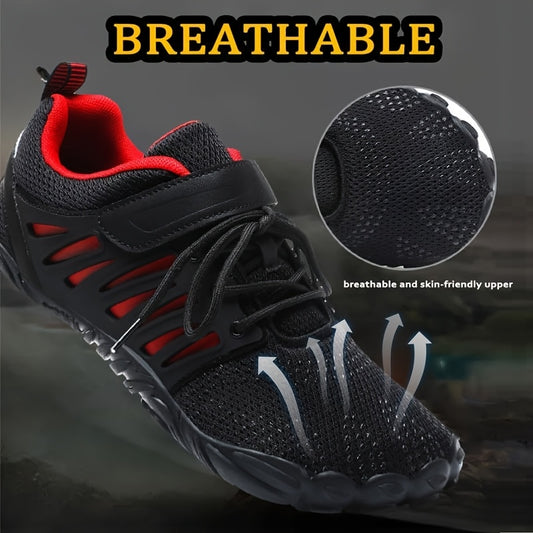
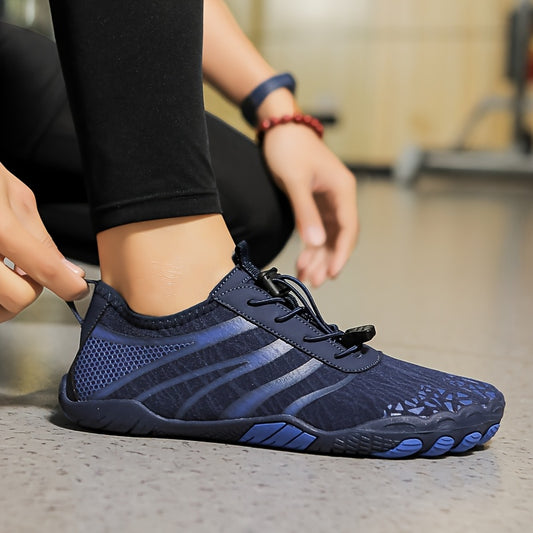
Best shoes for rowing machine
Choosing the Right Rowing Machine
When selecting a rowing machine for your home or gym, consider resistance type (air, magnetic, water, or hydraulic), build quality, footprint size, and performance tracking features. Some models are designed for competitive training with advanced feedback systems, while others prioritize space efficiency and ease of use. Local fitness equipment specialists or reputable online retailers can help match a machine to your fitness goals and budget.
Our Rowing Machine Recommendations
DX Foldable Rowing Machine
This premium water-resistance rower combines the natural feel of real water rowing with a space-saving foldable design, making it ideal for home gyms of all sizes. Its oversized water tank and enlarged paddles provide smooth, adaptive resistance that increases with effort for a full-body workout, while the solid wood construction and ergonomic features ensure durability, comfort, and stability at higher intensities. Bluetooth connectivity and performance tracking take training further by letting you monitor distance, time, and calories burned with ease.
H188 Magnetic Rowing Machine
Built for versatility and comfort, the H188 offers a 360° rotating handle system that mimics natural rowing dynamics, engaging your legs, core, back, and arms through an expanded range of motion. Its dual wind and magnetic resistance system delivers quiet, adjustable training for both gentle warm-ups and high-intensity sessions, while Bluetooth performance tracking with app integration helps you follow real-time metrics and stay motivated. Foldable convenience and ergonomic design make it a strong choice for busy home environments.
Sunny Rowing Machine (Compact Model)
This sleek magnetic rower prioritizes quiet operation and robust build quality, with adjustable resistance levels to suit different fitness levels. Featuring a clear LCD monitor that displays key workout data and a compact, space-saving frame that can be stored upright, it’s ideal for smaller spaces or multipurpose home gyms. The strong steel frame and easy assembly make it a reliable option for everyday cardio and full-body conditioning.
YOSUDA Rowing Machine
This water resistance rowing machine brings the feel of real rowing into your home with an immersive water‑driven workout that dynamically adjusts to your effort. Its oversized, sealed water tank delivers smooth and authentic resistance while engaging nearly the entire body throughout each stroke, and the sturdy construction supports users up to approximately 400 lbs with a comfortable, contoured seat and adjustable footrests. Bluetooth app connectivity and an integrated performance monitor make tracking time, distance, strokes, and calories simple, while foldable convenience and durable materials ensure it fits well into both home gyms and shared fitness spaces.
Rowing Machine And Lower Back Pain
Rowing machine for home can both alleviate and exacerbate lower back pain, depending on technique and individual condition, because the motion requires coordinated engagement of the legs, hips, core, and back to produce smooth force during each stroke.
When performed with proper form — keeping the spine neutral, engaging the abdominal and gluteal muscles, and driving power from the legs rather than the lower back — rowing can strengthen the muscles that support the lumbar region and improve spinal stability, which may help reduce chronic low back discomfort and enhance functional movement patterns according to exercise science analyses of rowing biomechanics.
Conversely, if a rower rounds or hyperextends the lower back, initiates the stroke with the torso instead of the legs, or lacks sufficient core stability, the repetitive motion can place undue stress on the lumbar discs and erector spinae muscles, potentially aggravating existing back pain or contributing to new strain.
Therefore, for individuals with a history of low back issues, it is critical to prioritize proper technique and gradual progression, and to consult with a healthcare provider or physical therapist to tailor rowing workouts that support recovery and minimize risk.
Conclusion
Rowing machines offer a unique combination of cardiovascular conditioning, strength development, and low-impact exercise that few other fitness machines can match. By engaging the legs, core, back, and arms simultaneously, they provide a full-body workout that builds endurance, strengthens muscles, and supports core stability while protecting joints from the impact stresses of running or high-intensity training. Whether you choose a magnetic, air, or water resistance rower, each offers distinct benefits: magnetic rowers deliver quiet, adjustable workouts ideal for home use; air rowers respond dynamically to stroke intensity, simulating real water resistance; and water rowers replicate the smooth, natural feel of rowing on open water while adding a meditative, sensory element to training.
Proper technique is key to maximizing these benefits and preventing injury. Maintaining a neutral spine, driving power from the legs, engaging the core, and following the correct stroke sequence ensures efficient movement and enhances muscular recruitment. Rowing also targets stabilizing muscles, including the abdominals, which support posture and overall functional strength. For those concerned with back health, proper form can even strengthen the lower back and reduce pain when incorporated into a balanced fitness routine. Additionally, wearing suitable footwear, such as flat, secure-soled shoes, optimizes power transfer and safety during workouts.
Choosing the right machine depends on your goals, space, and personal preferences. There are an array of high-quality options that can be chosen, from foldable water rowers that provide a realistic rowing experience to compact magnetic rowers built for quiet, adjustable workouts at home. By combining correct technique, consistent practice, and a machine that suits your needs, rowing becomes not only an efficient way to burn calories and build strength but also a sustainable, enjoyable, and versatile addition to any fitness routine. Whether you are a beginner or a seasoned athlete, a rowing machine can transform your approach to cardio, strength, and total-body fitness, offering measurable results while supporting long-term health and wellbeing.